Voices of Origin is rooted in a simple premise: harm and healing have origins. We bring evidence to action through research that informs our programs and partnerships—strengthening accountability, relational skill-building, and repair while advancing safety, choice, and support for those impacted.
OUR PHILOSOPHY
How We Transform Patterns
Interrupting Harm
Harm rarely begins in one moment. It grows through patterns: silence, shame, emotional shutdown, rigid roles, and learned ways of using power. Voices of Origin helps people recognize these patterns early, interrupt them, and practice a different path—one rooted in responsibility, dignity, and relational integrity.
Emotional Literacy
Strong families depend on the ability to regulate emotion and tell the truth. We combine emotional literacy—knowing what you feel—with accountability, shaping how emotions affect behaviour and others around us.
Grounded Spaces
Through Story Circles and Emotional Justice Labs, we teach practical skills: self-control, boundaries, and repair. Our programs serve all backgrounds, including spaces of incarceration and reentry, backed by ongoing research.
Research
Beyond applying existing evidence, Voices of Origin conducts original research. We measure attitudes, practices, power dynamics, and gender norms related to masculinities to inform the design and improvement of policies and programs at local, national, and international levels.
WHAT WE MEAN BY EMOTIONAL JUSTICE
Emotional justice is the practice of restoring dignity in the emotional life of individuals, families, and communities—so that feelings can be named without shame, impact can be faced without denial, and power can be exercised with responsibility. It combines emotional literacy (knowing what you feel), regulation (what you do with it), and accountability (how emotions shape behaviour and affect others).
In our work, emotional justice is not about excusing harm—it’s about interrupting cycles of harm by building the inner and relational capacities that make repair possible.
- Name what’s lived (truth without humiliation)
- Own impact (accountability without collapse)
- Practice repair (skills that change behaviour over time)

What We Mean by Origin
Origin names the conditions, meanings, and relational patterns that shape how harm is learned—and how repair becomes possible.
Origin as root conditions
The earliest conditions that shaped a recurring pattern—inside a person, relationship, or community.
Origin is where patterns take shape—and where repair can begin.Origin as first learning
What we first learned (explicitly or implicitly) about love, power, emotion, and conflict.
Origin is what we learned early—and what we can relearn with care.Origin as the body
How the nervous system learned safety and threat, and how protection shows up as stress or shutdown.
Origin lives in the body—before it becomes a story.Origin as meaning-making
The first meanings we attached to what happened—meanings that shape identity, shame, and belonging.
Origin is the meaning beneath the memory.Origin as story
The narratives we tell that shape identity, responsibility, and what change becomes possible.
Origin is the story beneath the story.Origin as culture and scripts
The norms and “scripts” we inherit about gender, sexuality, emotion, and authority—what becomes normal.
Origin is the script we inherit—and the one we can rewrite.Origin as language
What becomes speakable in a family or community—and what stays unnamed, silenced, or avoided.
Origin expands when language becomes possible.Origin as relationship
The relational field that shaped attachment, trust, boundaries, and how we respond to rupture and repair.
Origin is the relational template we learned.Origin as power
How power was modeled and justified—who had voice, who was silenced, and what accountability meant.
Origin is where power is learned—and where accountability can be practiced.Origin as a turning point
A moment when the pattern could have shifted—an interruption that didn’t happen or finally did.
Origin is the first moment harm can be interrupted.Origin as community memory
What a community carries across generations—trauma, resilience, rules, and collective survival strategies.
Origin is carried together—so repair must be shared.Origin as dignity and voice
The moment humanity is restored through truth-telling, witnessing, and being taken seriously.
Origin begins when a voice is finally heard.Our Foundation
Voices of Origin speaks to where harm and healing begin. Origin is not nostalgia for the past—it is the living root in the present: the body’s first signals of safety and threat, the stories we carry, the scripts we inherit about power and gender, and the relational patterns learned in families and communities. We listen for these origins with honesty and care, so what was once hidden can become speakable, accountable, and repairable. Our work helps people return to dignity by building the skills and supports that interrupt cycles of harm and make repair sustainable.
MISSION
To prevent gender-based harm and support community healing by transforming harmful narratives, expanding relational skills, and advancing evidence-informed education and rehabilitation through storytelling, research, and restorative practices.
VISION
Communities where harm is interrupted early, accountability is possible, families can repair, and people learn to relate with dignity, consent, and emotional responsibility.
VALUES
SAFETY-CENTERED
ACCOUNTABILITY
FAMILY REPAIR
CULTURAL HUMILITY
EVIDENCE-INFORMED
TRAUMA-RESPONSIVE
COMMUNITY PARTNERSHIP
“Healing does not erase what happened: it names it, assumes it, and transforms it into another way of relating to us.”
— Dalia M. LaFontaine, PhD
Signature Offerings
Story Circles
Facilitated listening spaces where lived experience is named with care, and communities practice empathy, responsibility, and honest reflection.
Emotional Justice Labs
Skill-based sessions that teach emotional regulation, boundaries, accountability, and repair—designed for real-life relationships.
Emotional Justice & Healing Summit
A public gathering of learning, story, and community practice—bringing together educators, helpers, and everyday people committed to safer relational culture.
FAMILY REPAIR PATHWAYS
Family repair is where prevention becomes real. We offer guided, safety-led practices that help restore trust and relational integrity within family systems—interrupting intergenerational patterns, strengthening co-parenting responsibility, and building repair skills that last.
When appropriate, these pathways can be adapted for spaces of incarceration and reentry, with clear boundaries and responsible coordination.
RESEARCH-TO-PRACTICE
We don’t separate learning from doing. Voices of Origin uses research, reflective practice, and outcome tracking to continually refine our programs—so communities receive approaches that are compassionate, culturally grounded, and increasingly effective over time.
✔ Research-informed curriculum design
✔ Ongoing evaluation and learning reports
✔ Outcome tracking and continuous improvement cycles
Evidence foundations (research-to-practice)
Voices of Origin is built on well-established science showing that humans can rebuild their inner “architecture” through learning and context: affective neuroscience (including Lisa Feldman Barrett’s work) describes emotions as constructed in the moment from body signals, concepts, and lived experience—meaning emotional life is trainable, not fixed.
Predictive processing research similarly frames the brain as an active meaning-maker that updates its models through experience. Neuroplasticity studies show that practice changes the brain, supporting our focus on repeated skills for regulation, boundaries, and repair.
Stress physiology research on allostatic load explains why chronic threat states narrow choice and increase reactivity—so restoring safety and regulation is foundational. Narrative identity research shows that people change through story and meaning-making—how we integrate the past and imagine the future
—supporting Story Circles and listening-based work.
Alongside this, we draw from Foucault’s discourse analysis to understand how power shapes what becomes normalized and speakable, and from sexual script theory to examine how inherited cultural “scripts” become personal and relational templates for behavior.
Finally, positive psychology helps explain how strengths and supportive relationships become durable resources (broaden-and-build) and how motivation sustains change when autonomy, competence, and relatedness are supported (self-determination theory).
As Ken Plummer writes, “we have always been the animal living with narrative power” (Plummer, 2019, p. 9). In plain terms: we combine science, skills, and story to reduce harm and strengthen family and community repair. These lenses guide how we design our curricula, interpret stories, and evaluate outcomes over time.

Why Emotional Justice?
Emotional justice means working with the emotional roots of harm, fear, shame, silence, entitlement—through individual and collective emotion regulation (how we breathe, speak, set limits, and listen together), so that truth can be named, responsibility taken, repair practiced, and trust slowly rebuilt.
It recognizes that emotions are not just “inside the head,” but shaped in our relationships, communities, and cultures—by whose feelings are welcomed, whose are silenced, and which gendered rules decide how we are allowed to feel.
Emotional justice asks questions like:
- What did this harm teach us to feel about ourselves and others?
- What beliefs about love, power, and gender were passed down to us?
- What would it look like to repair—not erase—what has happened?
Equanimity
Our work is grounded in equanimity: the capacity to stay present with difficult truths without collapsing into aggression or despair. Equanimity lets us listen, speak, and act from steadier ground—even when what we are facing is painful.
A STORY OF REPAIR WITHOUT ERASURE
Centuries ago in Japan, a cherished tea bowl was broken. The first repair returned it held together with metal staples—functional, but harsh, as if the break had to be hidden or endured. So artisans imagined another way. They repaired the bowl with lacquer mixed with gold, letting the fracture remain visible—not as a flaw, but as part of its history. The bowl became whole again, not by pretending it never broke, but by joining it with care.
That is the spirit behind Voices of Origin. We believe communities carry fractures too—within families, within relationships, and within the stories we inherit about power, gender, and emotion. Our work doesn’t deny what happened, minimize impact, or rush people into “moving on.” We create spaces where truth can be named, accountability can be practiced, and repair becomes a lived skill—so cycles of harm can end and dignity can return.

OUR PILLARS
Our foundation: repair that tells the truth. We honor what happened, name impact with dignity, and treat repair as a lived practice—not a cover-up, not a performance, and not a shortcut.
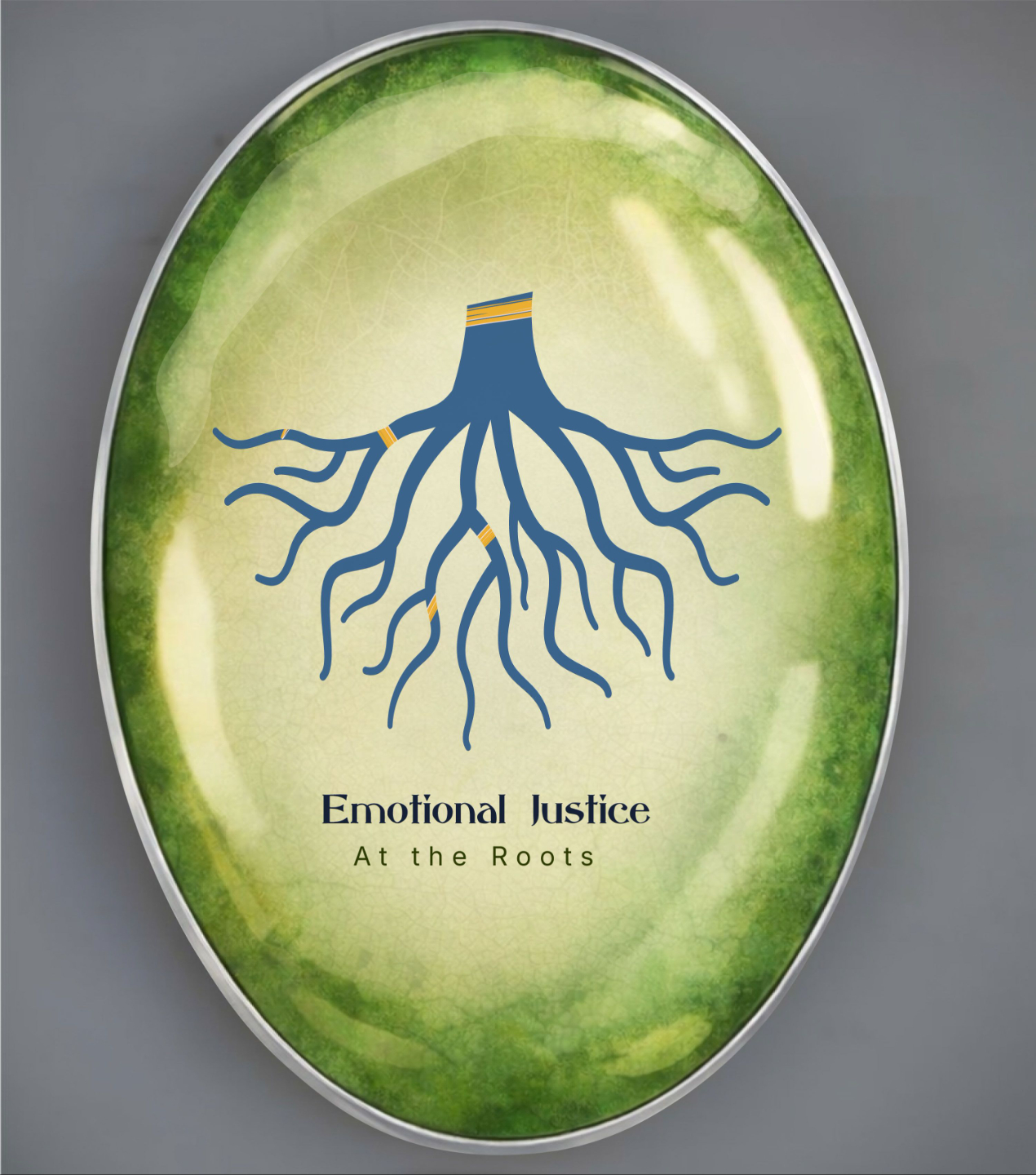
Emotional Justice at the Roots
We work at the origin layer where patterns begin: emotional learning, nervous-system survival responses, rigid scripts about power, and relational habits carried across generations. Here, people build practical skills—self-control, boundaries, accountability, and repair—so harm can be interrupted early and integrity can be practiced under stress.
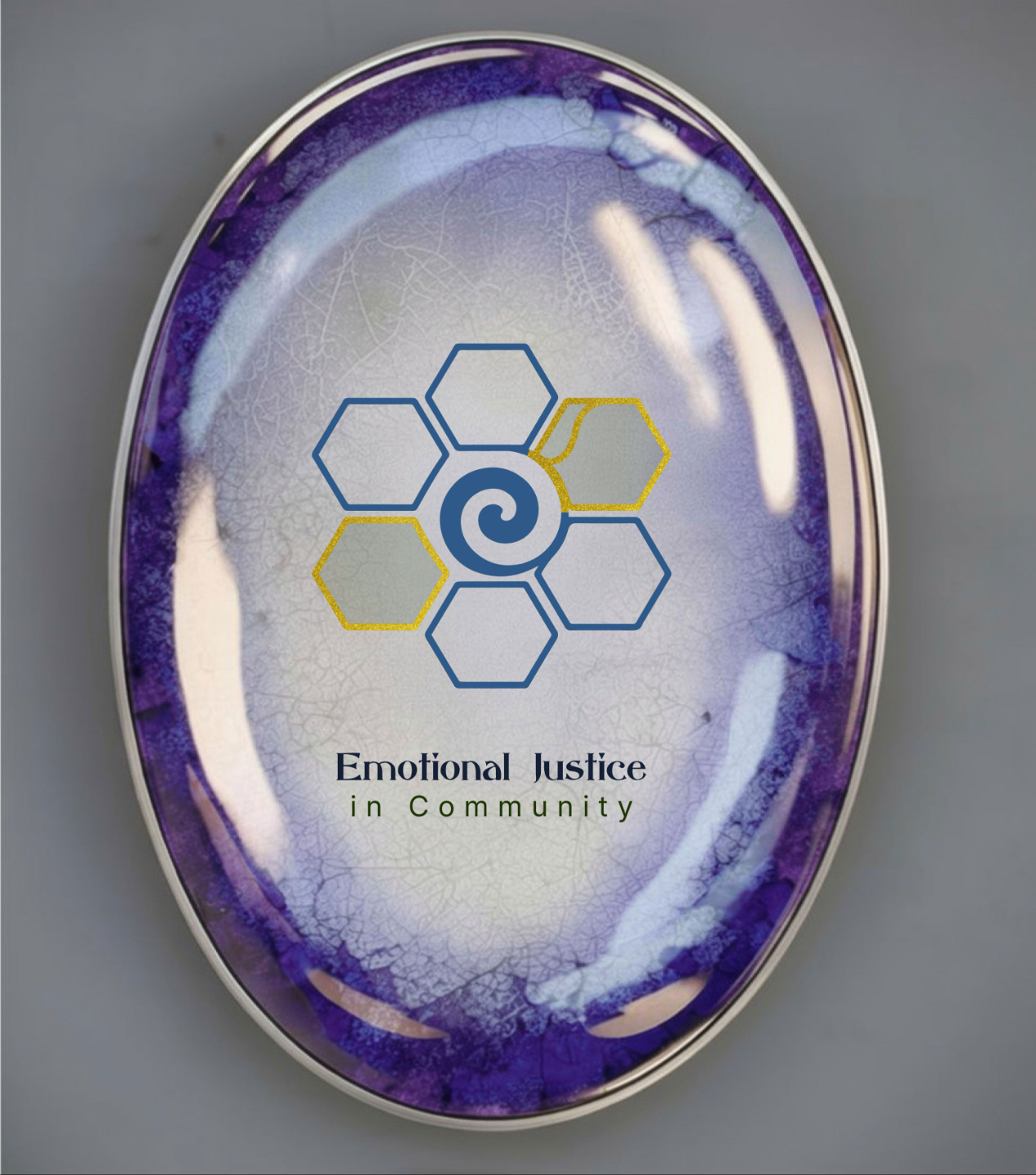
Emotional Justice in Community
Repair holds when community holds. This pillar builds the network around the work: partnerships, trained facilitators, referral pathways, and shared standards that support safety-led change.
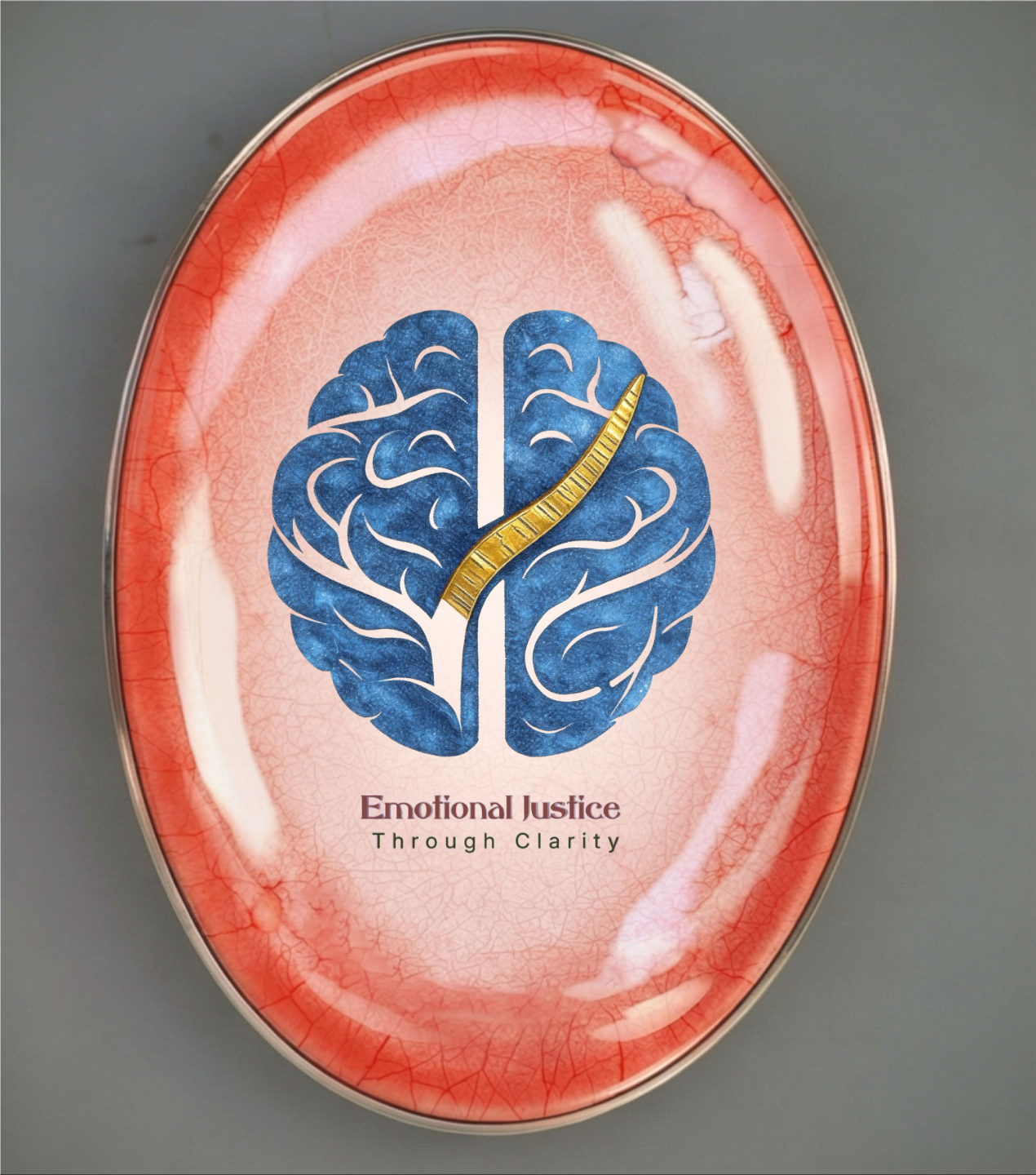
Emotional Justice through Clarity
We translate research into tools people can actually use, and we evaluate our programs to improve them over time. This pillar provides evidence-informed curriculum, training materials, and outcome tracking—so communities can respond with wisdom instead of myths or confusion.
Emotional Justice through Listening
Listening is not passive—it’s a practice that can restore dignity and open the door to accountability. This pillar includes Story Circles and paced, protected spaces for truth-telling, witnessing, and integration over time.
Voices of Origin:
Emotional Justice & Healing Summit
The Emotional Justice & Healing Summit is a gathering for people who are ready to look honestly at the emotional roots of gendered harm—and to imagine something different together. It is part fundraiser, part learning space, part collective ritual of repair, bringing together trauma specialists, somatic practitioners, emotion-focused therapists, researchers, and community storytellers.
Who It’s For
— Survivors and loved ones seeking language, community, and validation.
— Men and masculine-identified people wanting to transform patterns of control, silence, and emotional shutdown.
— Practitioners, researchers, and advocates working in gender violence, masculinity, mental health, and community healing.
— Artists, storytellers, and community leaders who believe change begins with the stories we are willing to tell and hear.
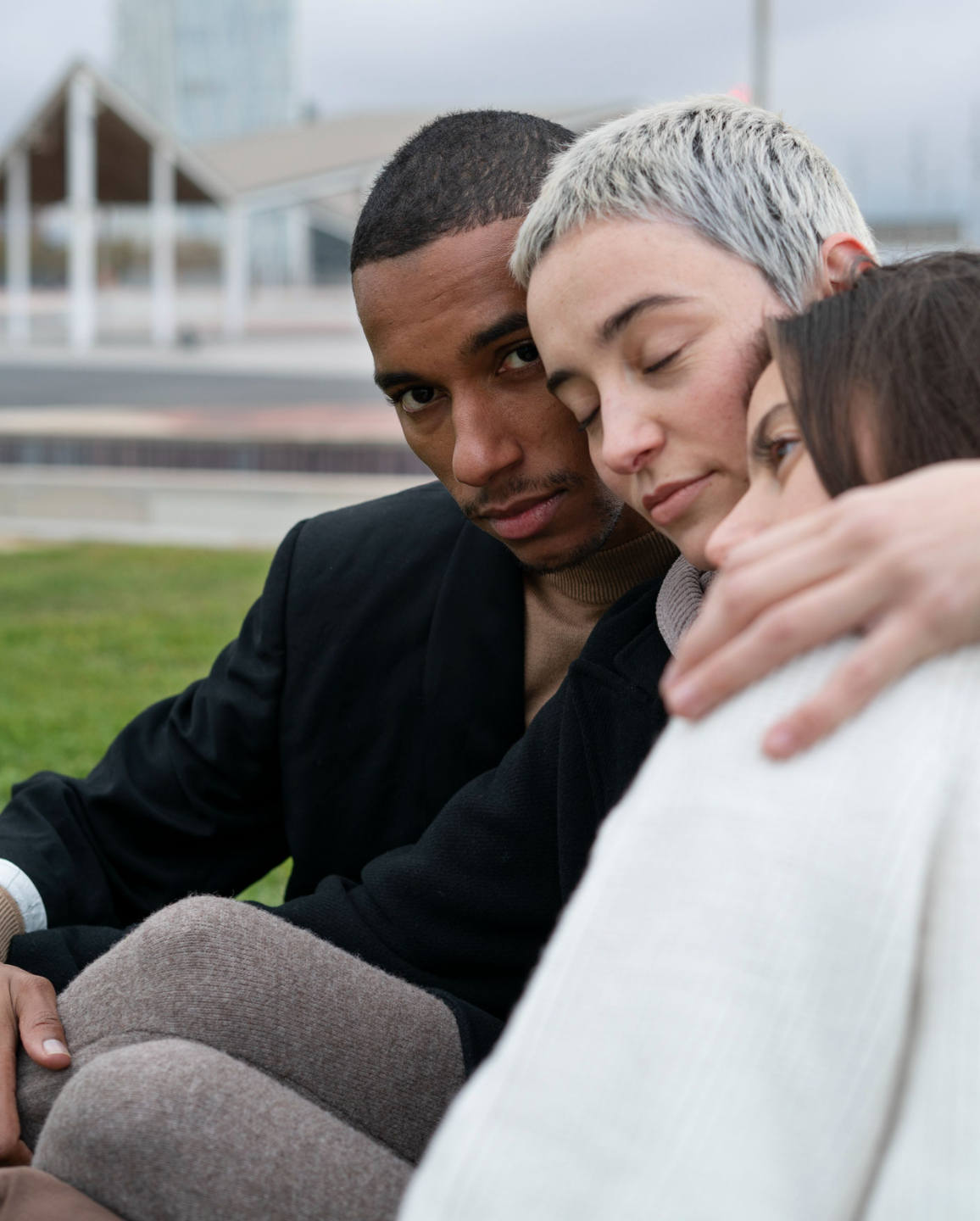
What Happens
— Keynote conversations on emotional justice, masculinity, and gendered harm.
— Story circles where participants can witness and be witnessed in a structured, moderated space.
— Emotional justice labs exploring ideas like Glass Masculinities and the TEMPERED Framework in clear, grounded language.
— Body-based and somatic practices to support regulation, safety, and connection (breath, grounding, simple movement).
— Artistic and kintsugi-inspired spaces to work with fracture, gold, and mosaic as symbols of repair and possibility.

Why Now
— Gendered harm continues to fracture families, communities, and public trust.
— Online cultures are teaching many boys and men that empathy is weakness and domination is power.
— Punishment alone cannot transform the beliefs and emotional patterns that sustain violence.
— People are hungry for spaces that honour both accountability and humanity—and that treat emotional repair as a form of justice.
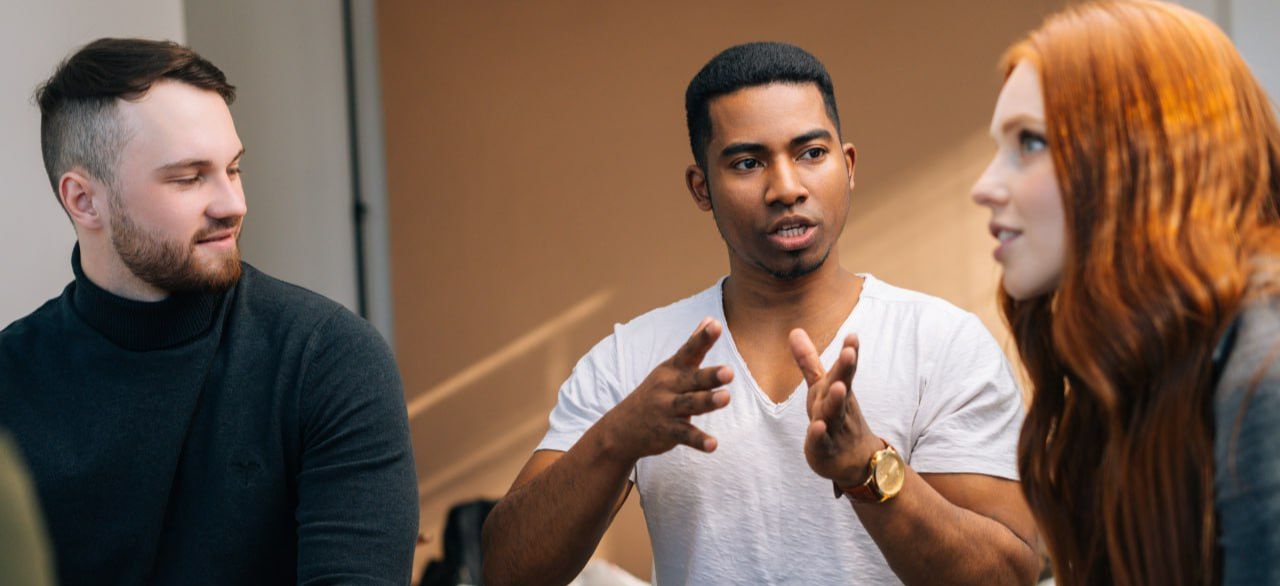
Symbol & Story
Our symbol reminds us that nothing whole has to look perfect—only honest, held, and in motion toward repair.
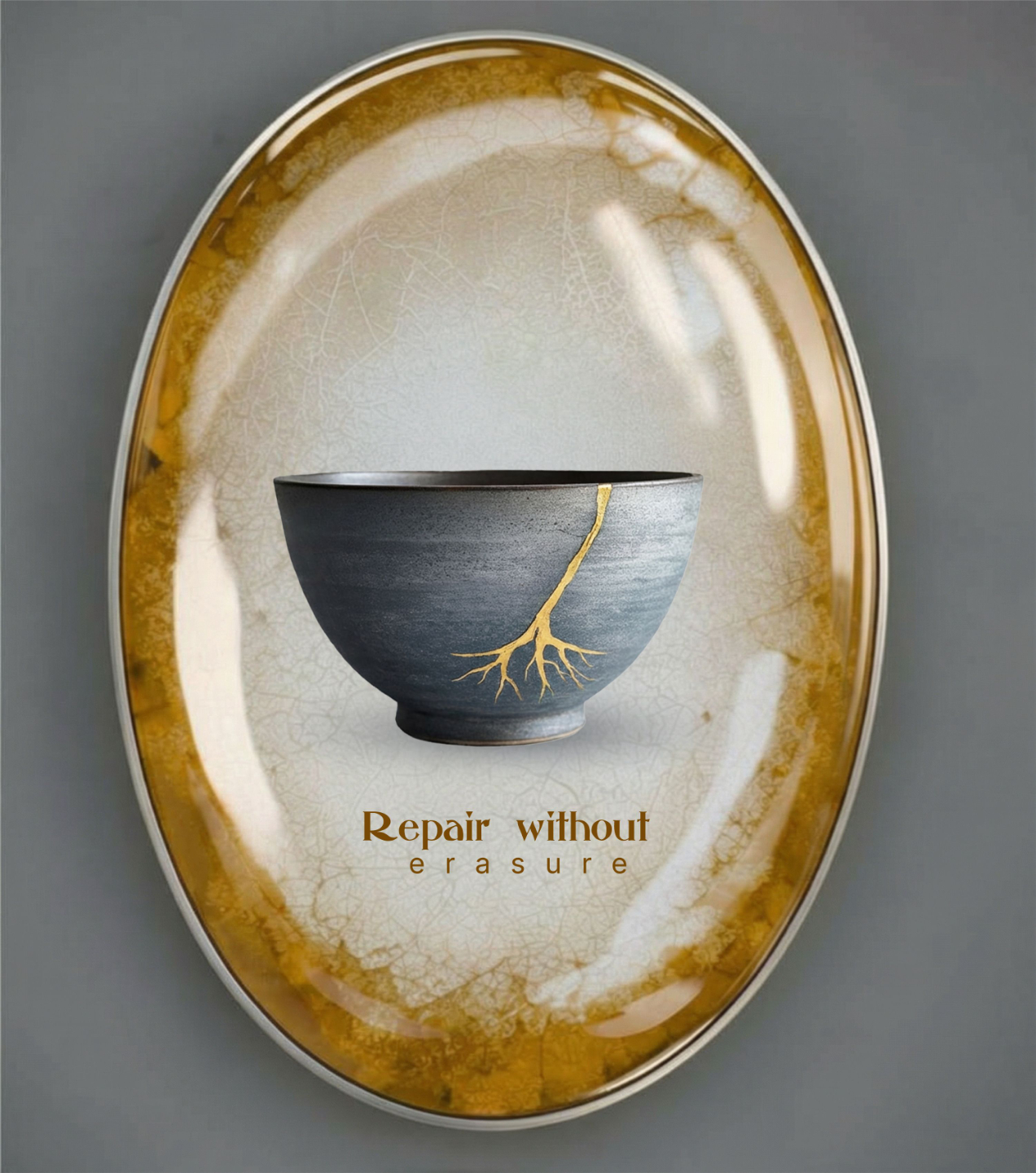
Inspired by the Japanese art of Kintsugi (repairing pottery with gold) and Antoni Gaudí’s Trencadís (mosaic from broken pieces), our symbol embodies the belief that damage is not denied.
Like a Gaudí mosaic, Voices of Origin is made of many hands, many stories, and many disciplines — joined in the practice of emotional justice. Fractures are named, responsibility is held, and something more honest and humane is rebuilt.
Our mosaic is made from fragments that refused to disappear.
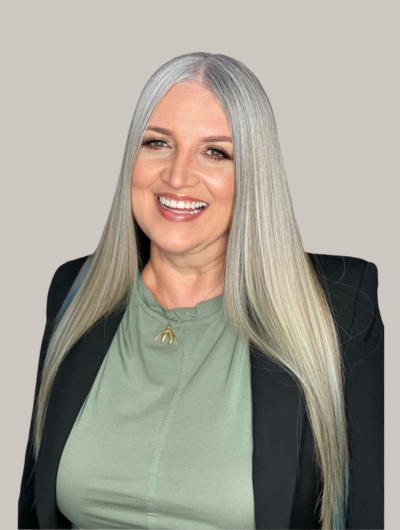
Dalia M. LaFontaine, PhD
Founder, Voices of Origin
Dr. Dalia M. LaFontaine is a holistic practitioner, doctoral researcher, and educator. Her work integrates clinical psychology, human sexuality, social sciences, trauma-informed approaches, and violence prevention. She pays special attention to how emotions, the nervous system, and language influence relational behavior and the meaning we assign to our experiences.
Voices of Origin emerged from a series of one-on-one interviews conducted as part of her academic and professional training, in which she listened to men incarcerated for femicide-related offenses. These were not group interventions or therapeutic programs; they were individual conversations held with emotional presence, clarity, and accountability.
Across these encounters, Dalia observed a recurring pattern she conceptualizes as Glass Masculinity: forms of masculinity that may look firm and dominant on the outside, yet are fragile within—built through emotional restriction, inherited silence, and narrow definitions of what it means to be “strong.” Under intense stress and high nervous-system activation, these structures can fracture; sometimes the fracture culminates in lethal violence with profound, irreversible harm.
Far from justifying violence, her work explores how emotional learning, survival responses, and cultural expectations intertwine. Taking a story seriously does not mean accepting every detail as literal fact; it means noticing how a person remembers, interprets, and upholds expectations about self and others—and how that meaning-making framework can normalize control, shame, silence, and harm, even when a story is not factually precise in every detail. Understanding that framework helps locate the roots of harm and interrupt its repetition.
At the center of her approach is respect for story and narrative as pathways to meaning and transformation. Voices of Origin is inspired not only by academic research, but also by artistic traditions that honor repair without concealment: Japanese kintsugi, which treats fracture as part of the object’s history, and Gaudí’s mosaics, which turn fragments into a resilient, living wholeness.
HOW TO SUPPORT VOICES OF ORIGIN
Donate
Help fund story circles, emotional justice labs, and research-informed programming.
Partner
Collaborate with us as a university, community organization, or foundation to co-host events or fund specific projects.
Host
Invite us to design a story circle, lecture, or emotional justice workshop for your community or institution.
Stay Connected
Receive updates on the Emotional Justice & Healing Summit, new research, and community offerings.
VOICE OF ORIGIN
Voices of Origin offers educational and restorative spaces and is not a substitute for therapy, psychiatric care, or legal representation.
If you are in immediate danger or crisis, please contact local emergency services or a trusted crisis line in your region.